
Clark County Criminal History Checks
No single screen contains the whole Clark County record. Begin with the public Circuit Court index for filed prosecutions, then open each entry and read the charge, status, disposition, and sentence. Search with the full name and spelling variants. A case number is the safest match. Date of birth can help distinguish two people, but public screens may limit personal identifiers.
Recent custody, state prison status, and Illinois conviction information live in other systems. Work from the event outward. Keep the case number and agency name as you move between sources.
When a name result looks close, do not rely on the name alone. Compare the filing year, case type, charge, and any public identity details. Then trace the result back to the clerk or agency that owns it. This layered check is especially useful when a case was amended, dismissed, sealed, or reported late to the state.
- Search Clark County in Judici for CF, CM, DT, TR, OV, or related case categories.
- Match the name to the case number and review each charge and later change.
- Ask the Circuit Clerk for the docket, disposition, or certified copy when the index is not enough.
- Check VINELink or call the sheriff for recent county custody, then use IDOC for state custody or parole.
- Use an ISP UCIA inquiry for statewide conviction information or fingerprint Access and Review for your own transcript.
Clark County's Courthouse Record Hub
The Clark County Courthouse brings the local case sources close together. Circuit Clerk Ami L. Shaw keeps the criminal docket and filed documents at 501 Archer Avenue in Marshall. Courtrooms and the State's Attorney are on the second floor. Probation also works from the courthouse. That compact layout matters because an index result, a prosecutor filing, a court order, and a supervision entry are related but held for different tasks.
The official Circuit Clerk page explains the clerk's role and routes users to case services. The image below records that official entry point.
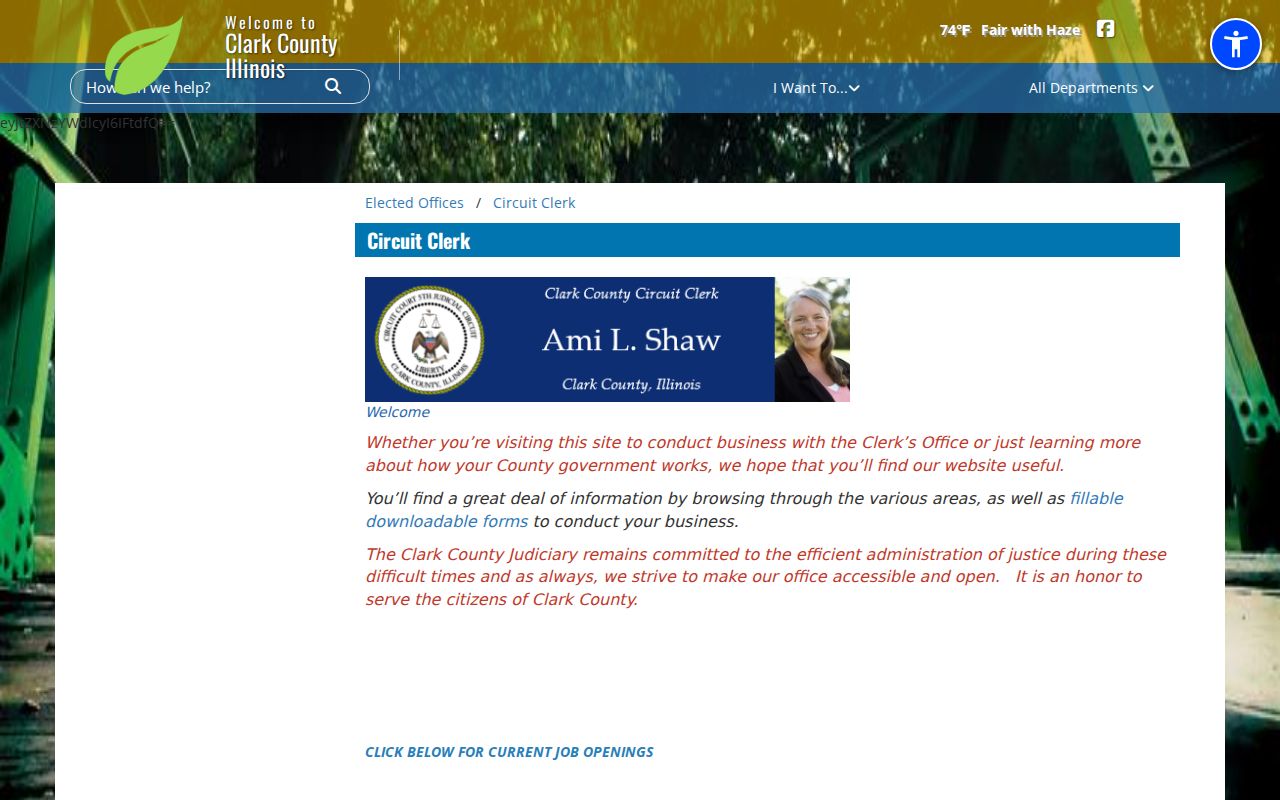
Use the clerk for filed charges, docket events, dispositions, plain or certified copies, old cases, and filing questions about expungement or sealing. Public hours are Monday through Friday, 8:00 a.m. to 4:00 p.m.; schedules can change.
Official Background Checks in Illinois
The Illinois State Police Bureau of Identification is the central state repository. A UCIA name inquiry returns conviction information maintained by ISP. It is narrower than a person's full fingerprint-supported Illinois transcript. The electronic name inquiry costs $10 and the manual paper route costs $16. Electronic and manual fingerprint-card products cost $15 and $20.
For a review of your own record, request fingerprint Access and Review through an Illinois-licensed live-scan vendor or a participating law-enforcement or correctional facility. ISP charges no processing fee for that service, though the fingerprint provider may charge. No licensed live-scan location inside Clark County was confirmed, so check the current ISP vendor list or ask the sheriff about civil fingerprint service.
| Official product | Fee | Best use |
|---|---|---|
| UCIA electronic name inquiry | $10 | Illinois conviction information |
| UCIA paper name inquiry | $16 | Manual conviction inquiry |
| ISP Access and Review | ISP $0 | Your own fuller Illinois transcript |
| FBI Identity History Summary | $18 FBI fee | Your own FBI-maintained history |
| Clark case search without number | $6 per year | Local court files |
The ISP fee schedule is the source to recheck before ordering because vendor charges can be separate.
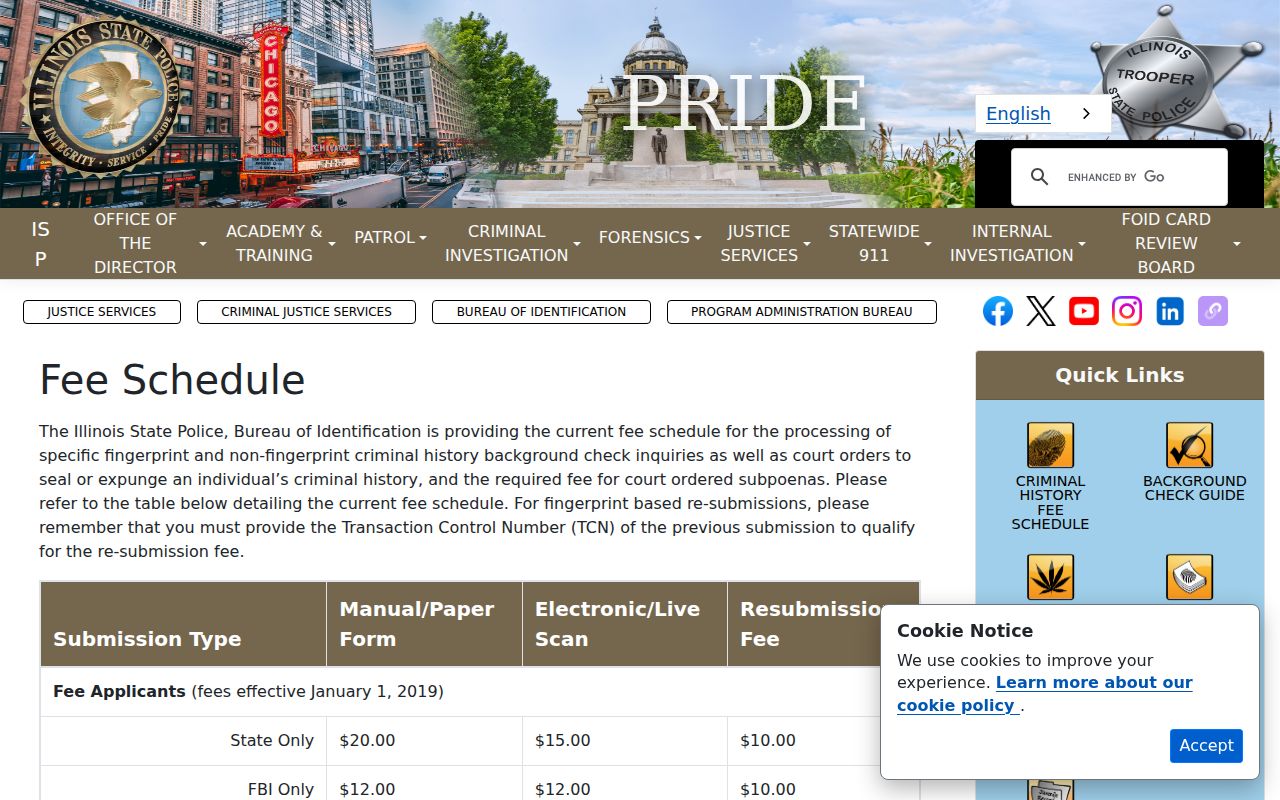
The official schedule distinguishes name and fingerprint products from the no-fee ISP Access and Review process.
Clark Records and the ISP Repository
An arresting agency creates the first report. If a person enters the Clark County Jail, the sheriff adds booking data, fingerprints, a photo, custody facts, and the charges presented at intake. Fingerprint-supported arrest data flows to the ISP Bureau of Identification. The State's Attorney then decides what to file, and the Circuit Clerk reports later court outcomes through the Illinois record chain.
The ISP Bureau of Identification page describes the repository behind these products.
CHIRP is not an unrestricted public name-search portal. It serves agencies and organizations with an ISP user agreement and authenticated access. The CHIRP portal image shows that separate official channel.
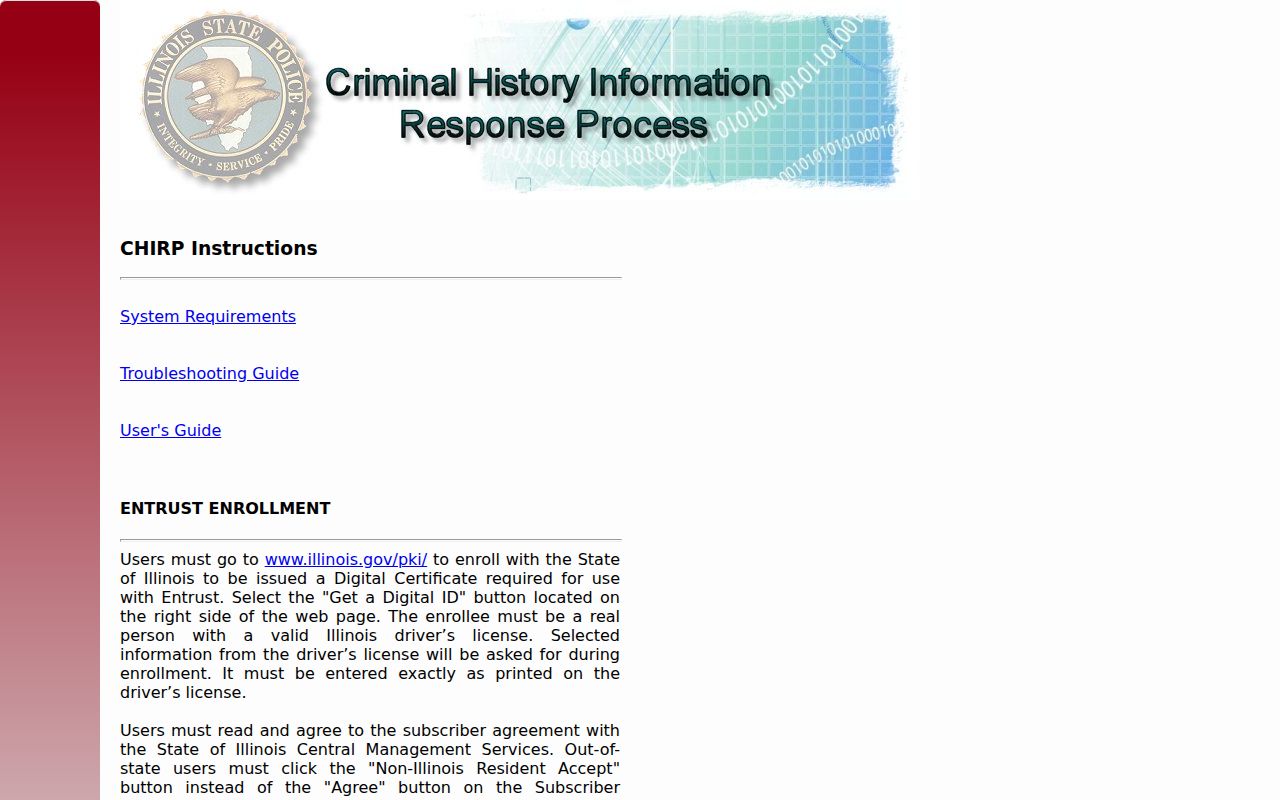
General public requests use the UCIA paper or licensed-vendor route. That distinction prevents a failed search for a public CHIRP account.
Repository gaps do happen. A local agency may not yet have sent a disposition, an old court file may not be online, or a name inquiry may join the wrong person. A certified Clark County disposition is the best evidence of what happened in the local case. For your own transcript, ISP's Record Challenge process provides the formal correction route.
Kinds of Criminal Records
A Clark County criminal record is not one document. Each source answers a different question, and each has its own access limits.
- Incident and arrest reports: the sheriff, a city police department, or ISP records the alleged event and arrest facts.
- Booking records: the Clark County Jail records intake, charges presented, bond or release, and custody data.
- Circuit Court files: the clerk holds filed charges, appearances, motions, orders, pleas, outcomes, sentence, and assessments.
- ISP history: the state repository joins fingerprint arrests with later disposition reports.
- Custody and registry records: county, state, federal, and registry sources show different forms of status.
Booking proves processing, not guilt. A filed complaint shows an allegation. A conviction requires a judgment of guilt. Those distinctions should guide every Clark County search.
Clark County Judici Search Fields
Clark County links to Judici from the official Illinois Courts directory. Judici operates the portal rather than the court. A CAPTCHA may appear, and the public display may not include document images. Search controls can change, so verify labels on screen.
| Control | How it helps |
|---|---|
| County | Select Clark from participating counties. |
| Case number | Use the strongest identifier when known. |
| Last and first name | Discover cases, then guard against same-name matches. |
| Middle name | Narrow a common name when the field is shown. |
| Date or year range | Limit filing or activity dates where offered. |
| Case type | Filter CF, CM, DT, TR, OV, or other categories. |
The Illinois Courts Clark County directory is the official route to the local lookup and courthouse services.
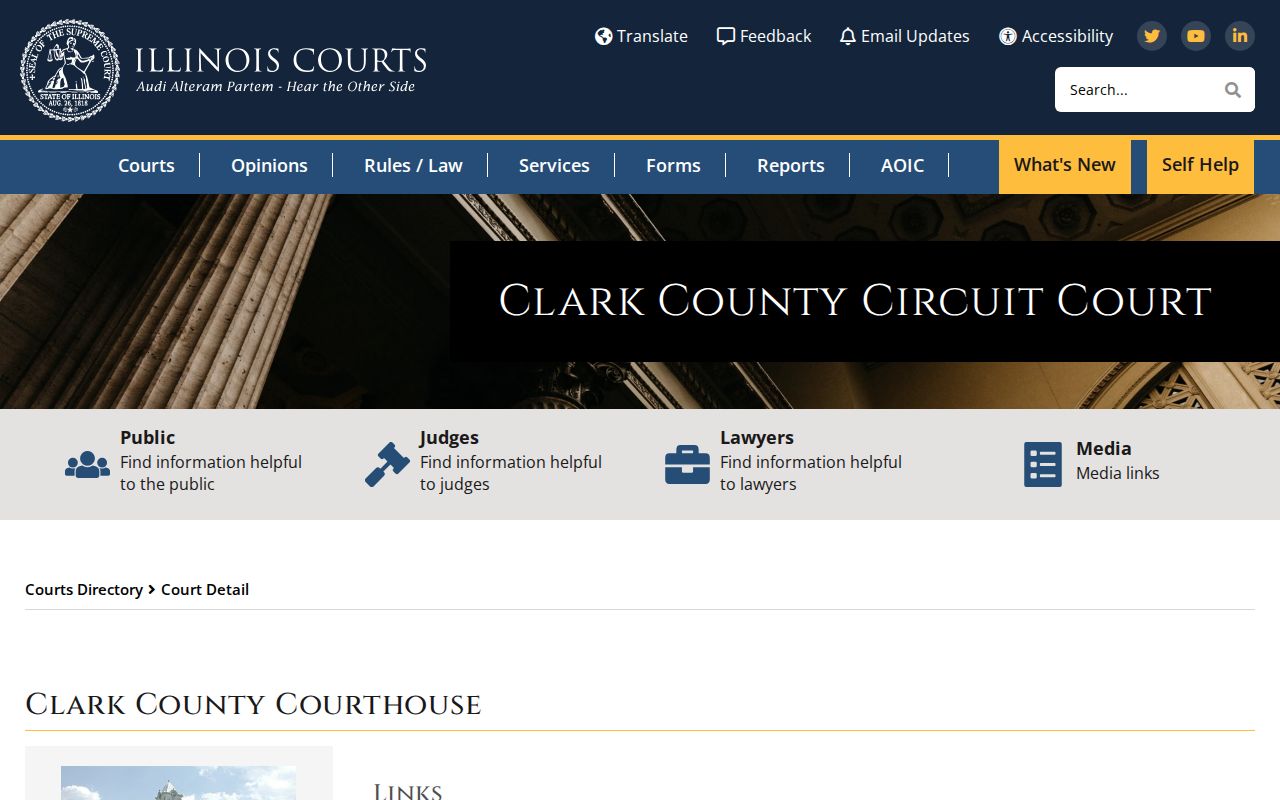
The directory also lists an e-filing kiosk, internet, a printer, adjacent parking, and disability coordination. It says mobile devices are allowed, but that is not permission to record a hearing.
Clark County Criminal Records: What They Contain
A repository transcript is arranged around identity and arrest cycles. The court file follows the prosecution. Reading both layers helps expose a charge that changed or an outcome that has not yet matched the arrest entry.
| Name and identifiers | Primary name, aliases, birth details, sex, race, state identifier, and fingerprint-based identity data where authorized. |
|---|---|
| Arrest cycle | Arrest date, agency, charge text, Illinois citation, offense class, and tracking information. |
| Court case | Case number, filed charge, appearances, motions, hearings, pleas, and orders. |
| Disposition | Conviction, acquittal, dismissal, supervision, or another result for each charge. |
| Sentence | Custody, probation, restitution, financial assessments, or other court orders. |
| Supervision status | Court probation entries or IDOC custody, parole, and mandatory supervised release data. |
Clark County Custody Has Three Layers
Use the Clark County Sheriff and Illinois VINELink for current or recent local custody. VINELink may show a name, custody status, location, booking date, release date when known, and notification options. Very recent intake can lag, so call the jail at 217-826-6393 when a result is missing.
The IDOC Individual in Custody Search covers current state custody and parole or mandatory supervised release, not the county jail and not completed sentences. Federal custody is separate.
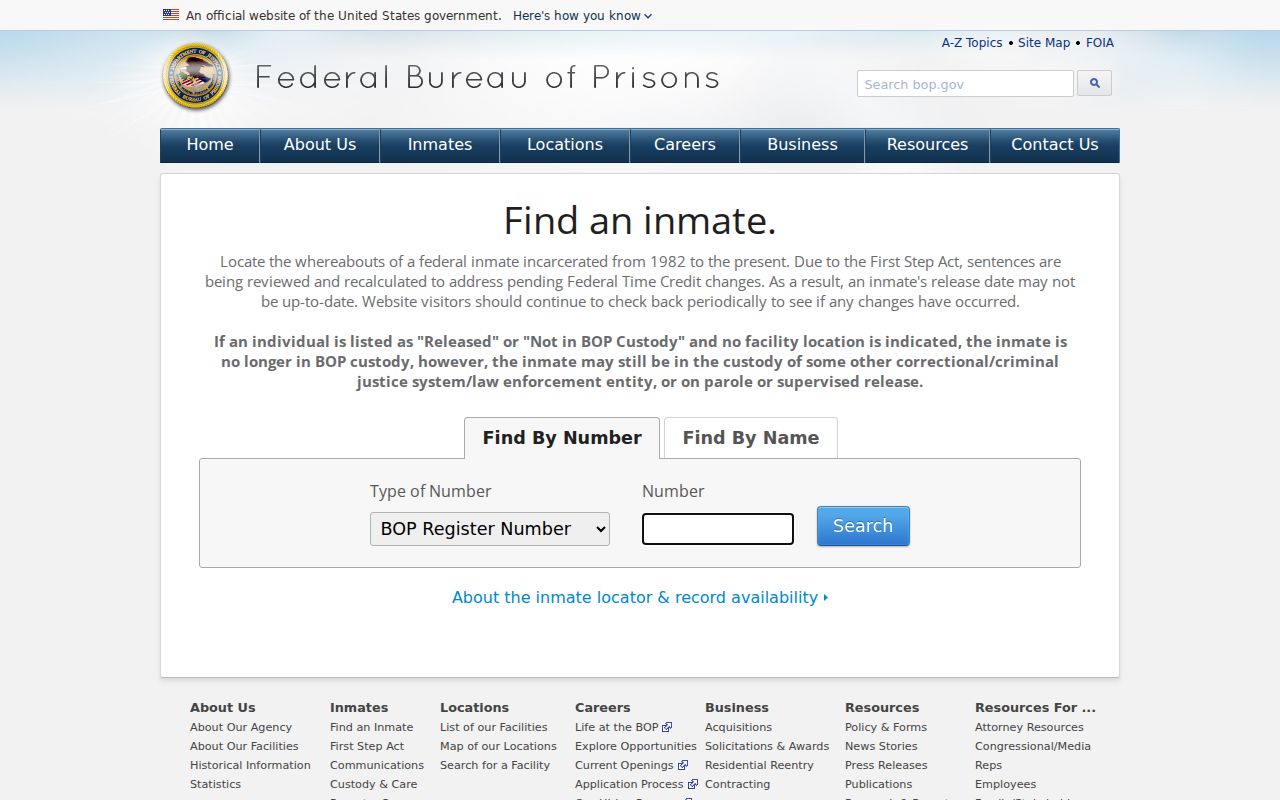
The pictured Federal Bureau of Prisons locator is useful only for the federal layer. Clark County lies in the Southern District of Illinois, whose court files are obtained through federal court and PACER channels.
Illinois Public Access Laws
Public access depends on the record holder. The Circuit Clerk provides court files, ISP disseminates the conviction product set by state law, and the agency that made a police report responds under FOIA. A public index does not override a sealing order, juvenile confidentiality, protected victim data, or an active-investigation exemption.
Key access rules:
5 ILCS 140/3 sets FOIA request methods and the usual five-business-day response period.
20 ILCS 2635/5 opens ISP conviction information to public inspection, subject to legal protections.
Illinois Remote Access Policy explains why remote court access can be narrower than courthouse access.
20 ILCS 2630/5.2 controls expungement and sealing.
Clark County Sheriff FOIA Route
The sheriff publishes no separate records division portal. Start at the Sheriff and Jail, 207 North 5th Street, Marshall, by phone at 217-826-6393 or by email to bill.brown@clarkcountyilsheriff.gov. The posted report-copy fee is $5. Do not assume that price covers video, photographs, 911 audio, certified copies, or a broad search.
Describe the report by date range, place, incident or case number, and agency. State the delivery format you want. Illinois FOIA usually requires a response within five business days, though a public body may issue a permitted written extension.
Clark County Sheriff
207 N. 5th St., Marshall, IL 62441
217-826-6393
Arrest, jail, report, and warrant starting point
Circuit Clerk
501 Archer Ave., P.O. Box 187
217-826-2811
Filed cases, dispositions, and copies
State's Attorney
Second floor, 501 Archer Ave.
217-826-6142
Felony, misdemeanor, and summary prosecutions
Restricted, Sealed & Expunged Records
Clark County searches omit or restrict juvenile cases, sealed and expunged matters, presentence investigations, protected victim and minor identifiers, account numbers, sensitive health data, and some active-investigation material. Redaction removes protected parts while releasing the rest. Sealing blocks ordinary public access but preserves access for users allowed by law. Expungement provides a broader statutory removal or destruction remedy for eligible records.
File in the circuit where the arrest happened or the charge was brought. The Illinois Courts publishes statewide forms. Gather each arrest and case number, get certified dispositions, select the correct request, and file with the Clark Circuit Clerk. A person with events in more than one county may need more than one petition. Eligibility and wait time depend on the exact result, offense, sentence, and later history.
The ISP Access and Review page explains how a person can compare a state transcript with court outcomes and challenge a mismatch.
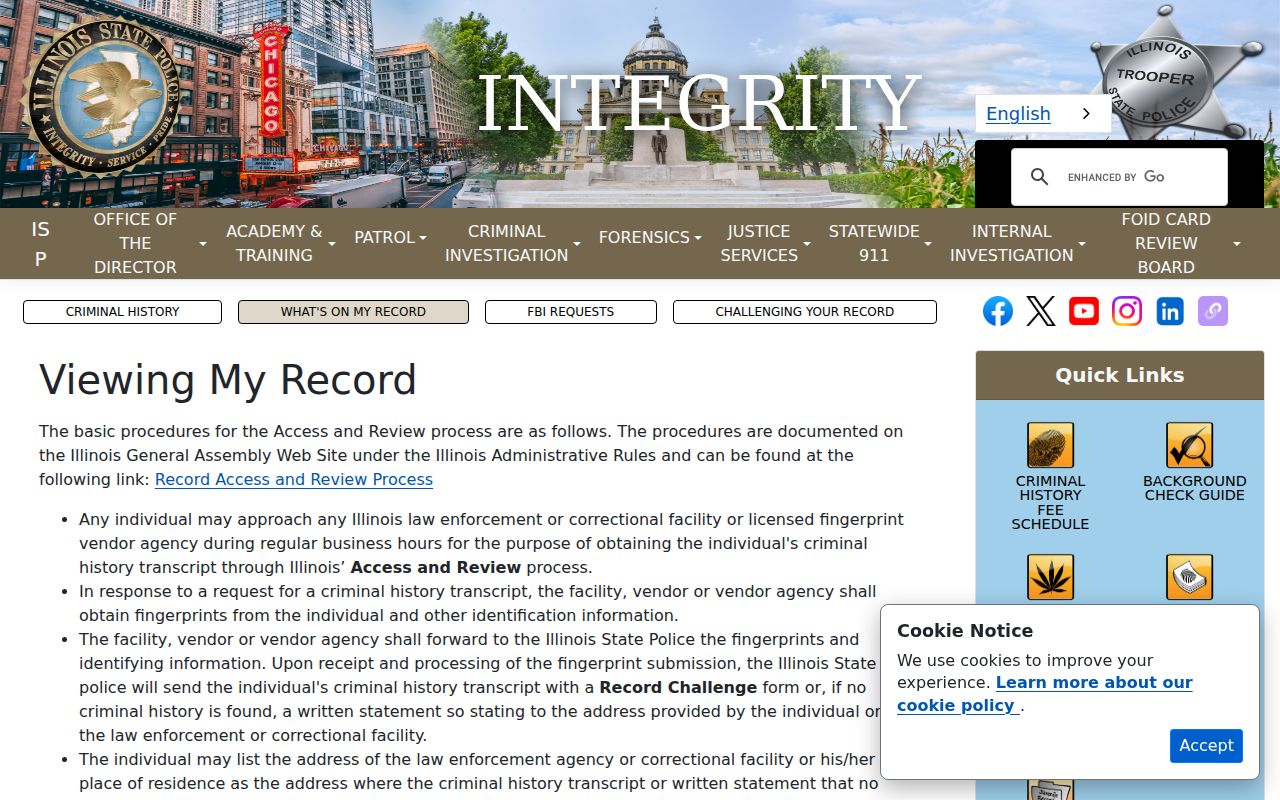
ISP sends the transcript and Record Challenge form by mail. Keep the transaction control number and attach certified court documents when a reported outcome is wrong.
Decode Clark County Case Labels
The unified Circuit Court uses case categories instead of separate felony and misdemeanor courts. A code narrows the search and helps explain why records that stem from one event may appear under different case types.
- CF
- A filed case with at least one felony count.
- CM
- A case whose most serious filed charge carries less than one year in jail.
- DT
- A driving-under-the-influence case.
- TR
- An eligible minor traffic matter.
- OV
- A local ordinance violation.
- MX
- A criminal-related miscellaneous matter, such as a search warrant or some sealing petitions.
The State's Attorney decides which charge to file. The judge decides the case. The clerk records the result. A sheriff booking charge can therefore differ from the final court charge.
Clark County's Federal Record Layer
Federal prosecutions do not appear as Clark County Circuit Court cases. Clark County falls within the U.S. District Court for the Southern District of Illinois. PACER and the federal clerk provide docket and document access, while the FBI Identity History Summary is a fingerprint-based product that only the subject may request.
The Southern District of Illinois website provides the authoritative federal court route.
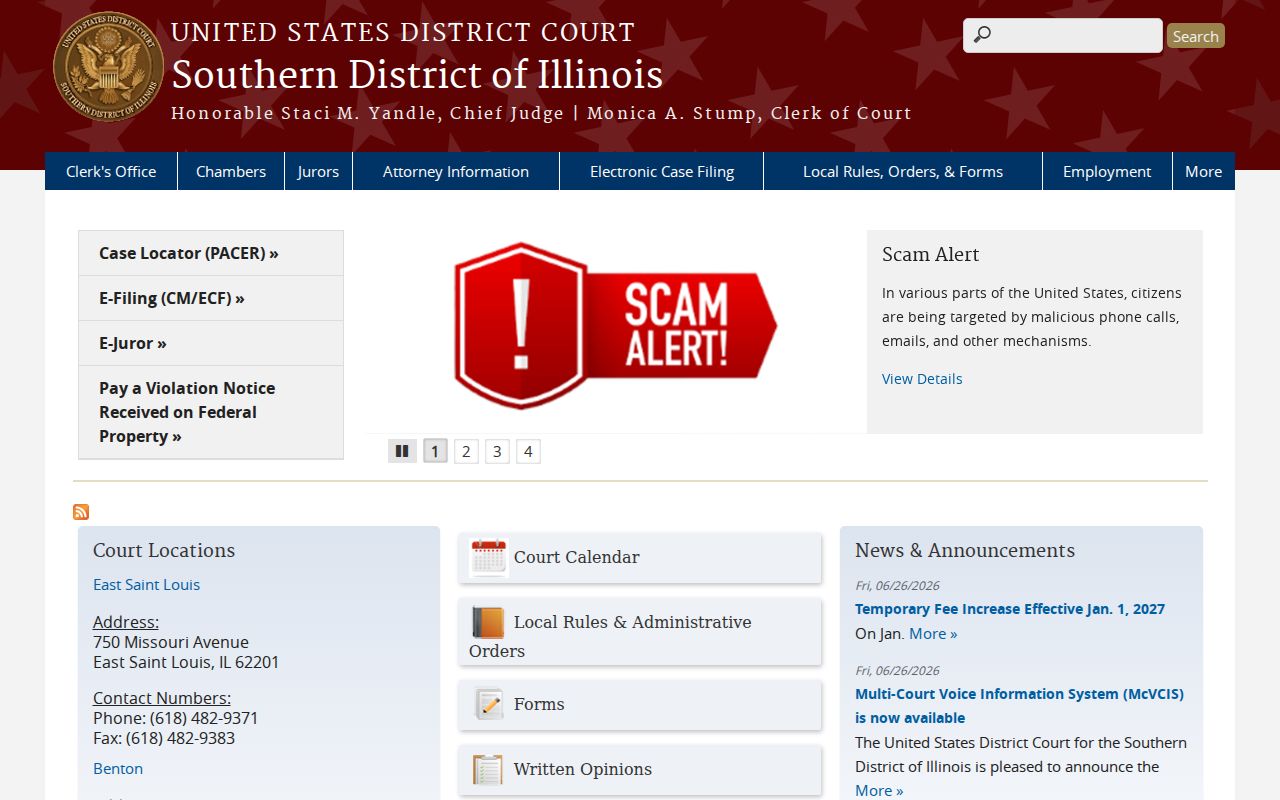
A federal docket does not replace local court, sheriff, or ISP records. Use it only when the event was charged in federal court.
City-by-City Criminal Records in Clark County
Marshall, Casey, and Martinsville police create their own incident and arrest material, but court cases route to Illinois circuit courts. The correct city source depends on who made the report. Casey also crosses the Clark and Cumberland county line, so the county printed on a citation or named by the arresting agency controls the court search.
Marshall Record Check
County seat with city police and Clark County court and jail routing.
Casey Record Check
A multi-county city where the event location determines the circuit court.
Martinsville Record Check
City Hall houses police services and local FOIA contacts.
Clark County Charges Change Hands
A police or sheriff report records the first allegation. The State's Attorney reviews it and decides what to file. The Clark County State's Attorney page identifies the local prosecution office.
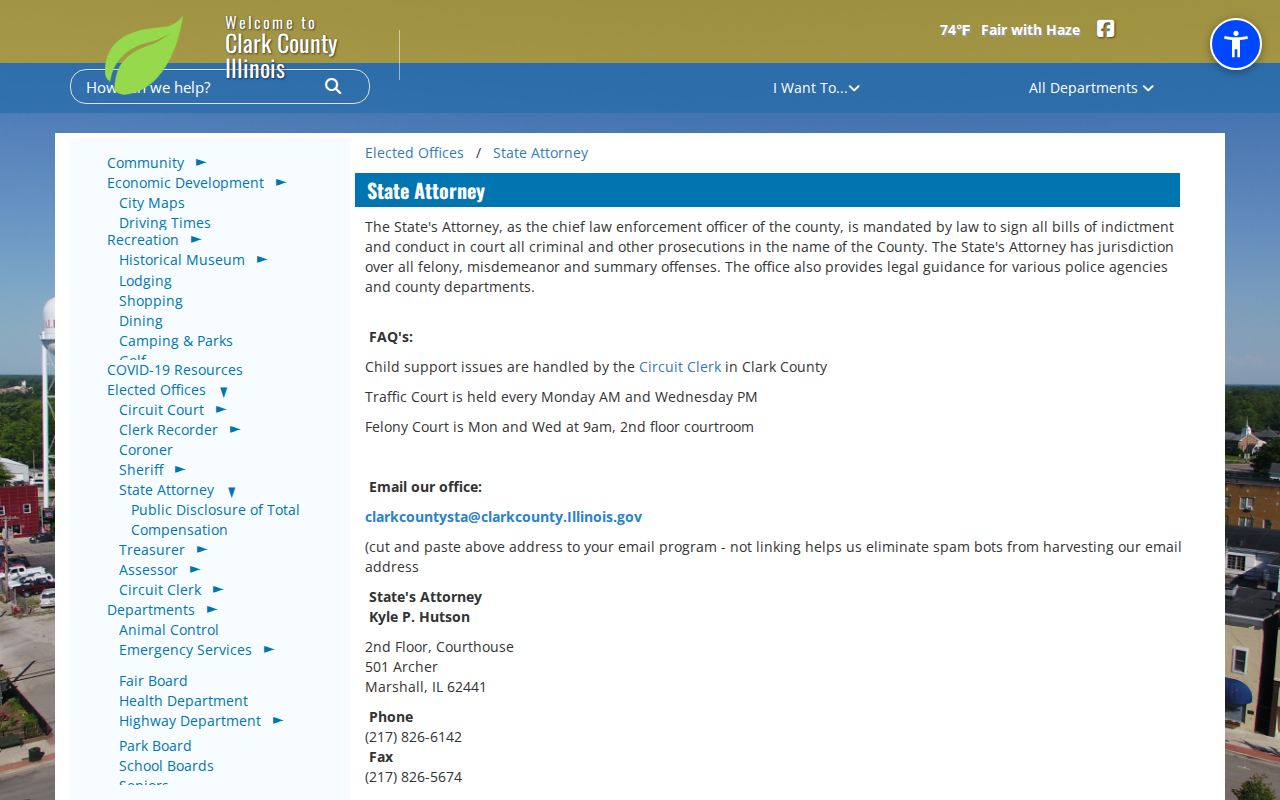
The Circuit Clerk then opens the case and tracks each later step. Charges may be amended, dismissed, resolved through a plea, tried, or placed under supervision when authorized. A final disposition is the key fact. Searchers should not treat the first arrest label or a pending docket as the outcome.
Financial entries need care too. A balance or assessment can show what the court ordered, but it does not describe the full result on its own. Read it with the judgment, sentence, and charge-level disposition. Ask the clerk for the filed order when the short docket text is unclear.
Records can also lag. Older files may not be digitized, and a disposition may not yet be paired with its arrest cycle at ISP. When two layers disagree, obtain the certified Clark County disposition and use the ISP Record Challenge process for an incorrect state transcript.