
Criminal Court Cases in Clark County
Clark County uses one unified Circuit Court for felony, misdemeanor, DUI, traffic, ordinance, and related criminal filings. It belongs to Illinois's Fifth Judicial Circuit. The Circuit Clerk keeps the local case file, enters docket events, receives filed papers, and issues plain or certified copies. There is no separate county criminal court for misdemeanors and no city judicial court in Marshall, Casey, or Martinsville. City citations and prosecutions that become judicial matters route into the proper circuit file.
The Clark County Circuit Court sits at 501 Archer Avenue in Marshall. Courtrooms and the State's Attorney are on the second floor. The posted local schedule places felony court on Monday and Wednesday at 9:00 a.m., with traffic matters Monday morning and Wednesday afternoon. Schedules can change, so call the clerk before using a posted time to plan a records visit.
One Clark County Criminal Court
A common mistake is to search for separate felony and misdemeanor clerks. Illinois gives its circuit courts original jurisdiction, and Clark County's single clerk maintains both kinds of criminal case. What separates the files is the category code, not a different courthouse. The prosecutor brings felony, misdemeanor, and summary prosecutions, while the judge controls hearings and final orders.
The Illinois Courts directory confirms courthouse resources, clerk contact, parking, accessibility services, and the e-filing kiosk. Mobile devices being allowed in the building does not grant permission to record a hearing.
The official court page pictured by the county identifies the local judicial office.
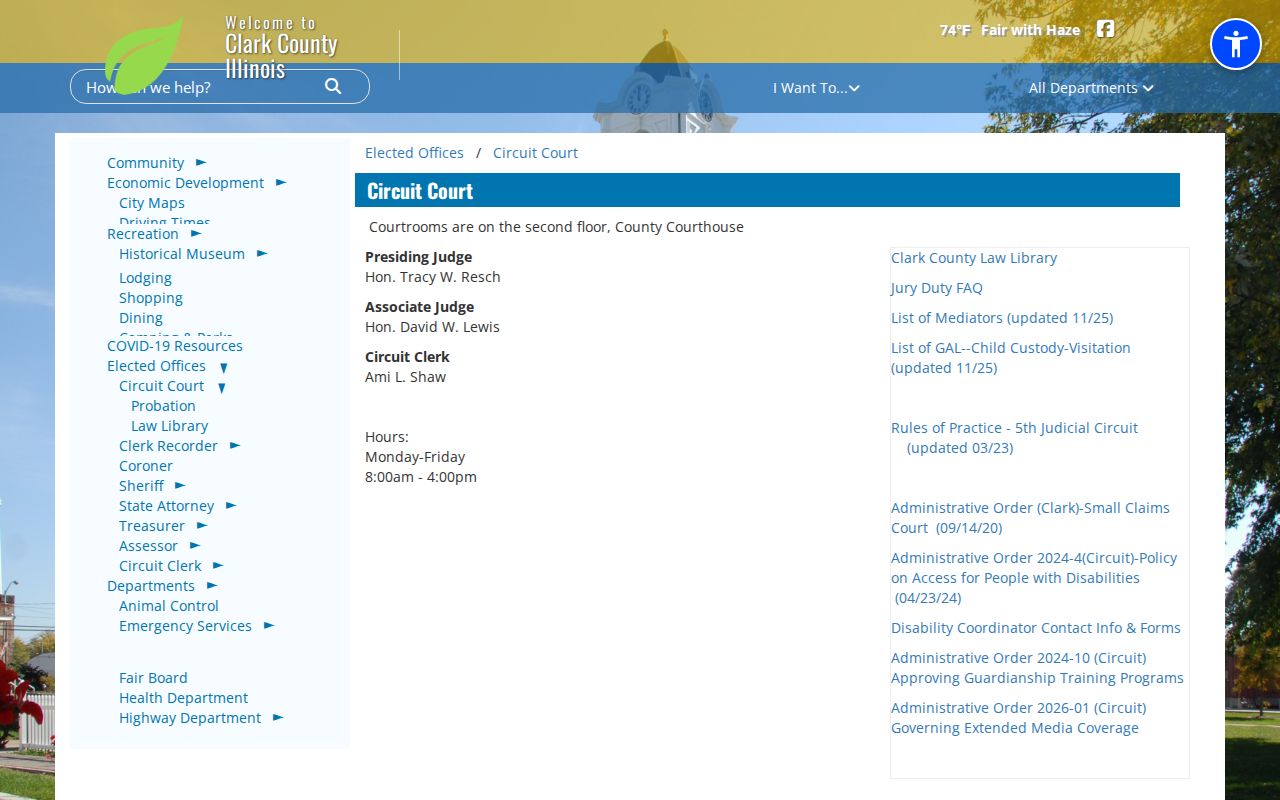
The image helps distinguish the court's hearing role from the clerk's record counter.
Clark County Case Record Searches
The county and Illinois Courts link readers to Clark County's Judici search. Judici is operated outside the court, and a CAPTCHA blocked a complete research inspection. Use only the controls shown on the live form. Do not assume that a missing result means no case exists. Older matters, restricted files, spelling differences, and recent entries may require the clerk's help.
- Open the Clark County search and choose the criminal controls shown.
- Try the party name or exact case number, preserving its year and code.
- Compare results by filing year, category, status, and available party details.
- Read docket events in date order, treating charges as allegations until resolved.
- Request the needed document or certified disposition from the Circuit Clerk.
The officially linked local search screen supplies the first pass for Clark County docket discovery.
When that screen cannot resolve identity or outcome, the clerk's file is the controlling local source.
Order Clark County Case Dispositions
The Circuit Clerk copy request is the fallback for a missing docket, old file, or certified outcome. The requester supplies contact details and describes the desired document. A case number avoids the $6-per-year record-search charge. The form asks whether certification is needed and how copies should be delivered.
| Field | Type | Required | Use |
|---|---|---|---|
| First and last name | Text | Yes | Requester identity |
| Email and phone | Contact | Yes | Price and questions |
| Case number | Text | No | Avoids a year search |
| Certified copy | Choice | Yes | Adds certification |
| Request details | Text area | Expected | Names documents and dates |
| Delivery method | Choice | Yes | Sets receipt method |
Normal processing is one to three business days after receipt, with copies released after payment. Accepted mailed payment is a USPS money order, company check, or cashier's check, not a personal check. Email the clerk to elect card payment.
The official copy page shows how Clark County turns a docket lead into a usable disposition.
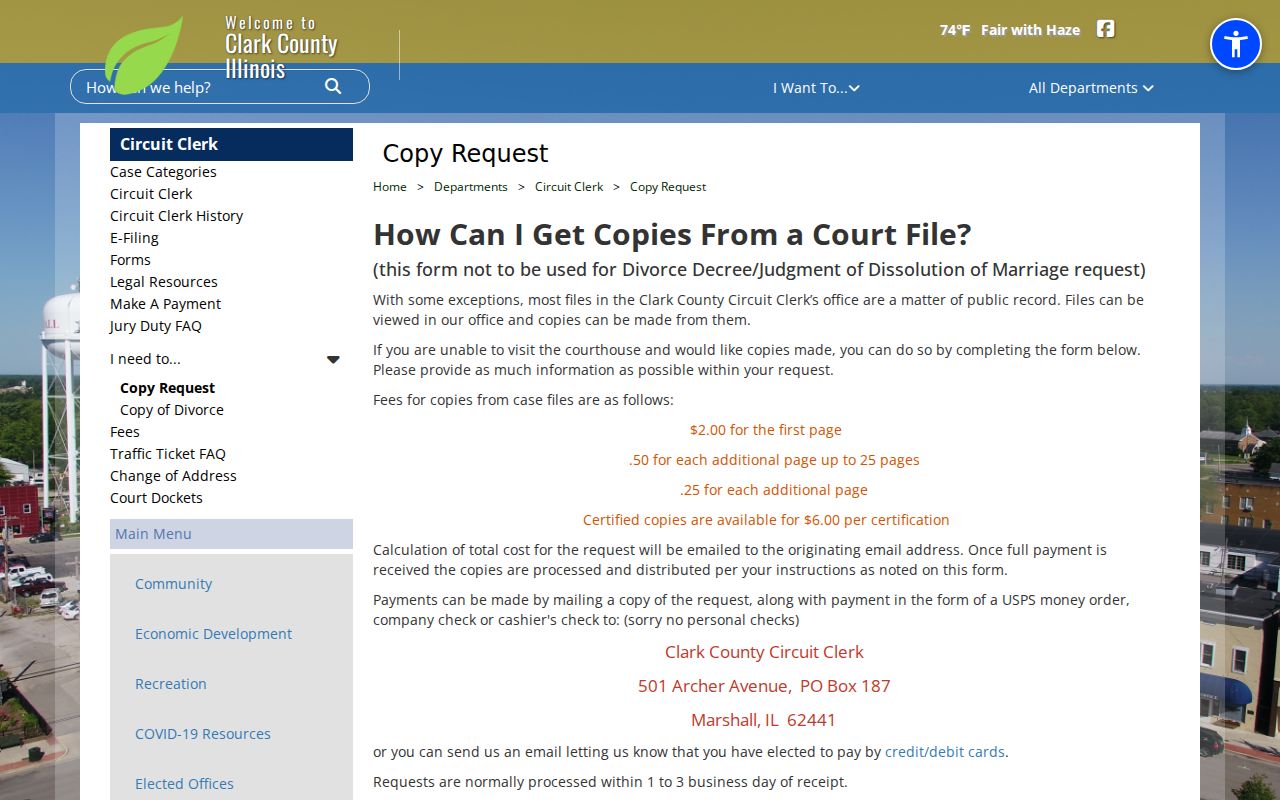
That form is useful when the remote index does not display the document itself.
What a Criminal Case File Contains
A Clark County court file tracks the prosecution after filing. It may identify the case number, year, category, parties, filing date, charged statute, docket events, status, judge, hearings, judgment, sentence, financial orders, and public document availability. Remote screens may omit protected detail or papers available only at the clerk's counter.
| Case number and court | Identifies the Clark County matter, filing year, and category. |
|---|---|
| Charging document | States allegations filed by the prosecutor, subject to amendment. |
| Docket entries | Lists filings, orders, appearances, and hearings by date. |
| Hearing dates | Shows scheduled proceedings when publicly available. |
| Disposition and judgment | Distinguishes pending, dismissed, acquitted, supervision, and convicted outcomes. |
| Sentence and conditions | Records public sentencing orders and assessments. |
A police narrative is not automatically in this file. Ask the arresting agency for it. For the custody trail, use the county arrest search channels.
Read Clark County Criminal Codes
Category codes narrow a Clark County search when names return several results. They describe the docket class, not guilt or final outcome. The county's case-category page supplies the definitions.
- CF
- A case containing at least one felony charge.
- CM
- A misdemeanor case with a top charge carrying less than one year.
- DT
- A driving-under-the-influence case.
- TR
- A qualifying minor traffic case.
- OV
- An ordinance-violation case.
- MX
- A miscellaneous criminal-related matter, such as a warrant, seized property, probation transfer, or standalone sealing petition.
The captured category page gives readers a direct way to decode Clark County results.
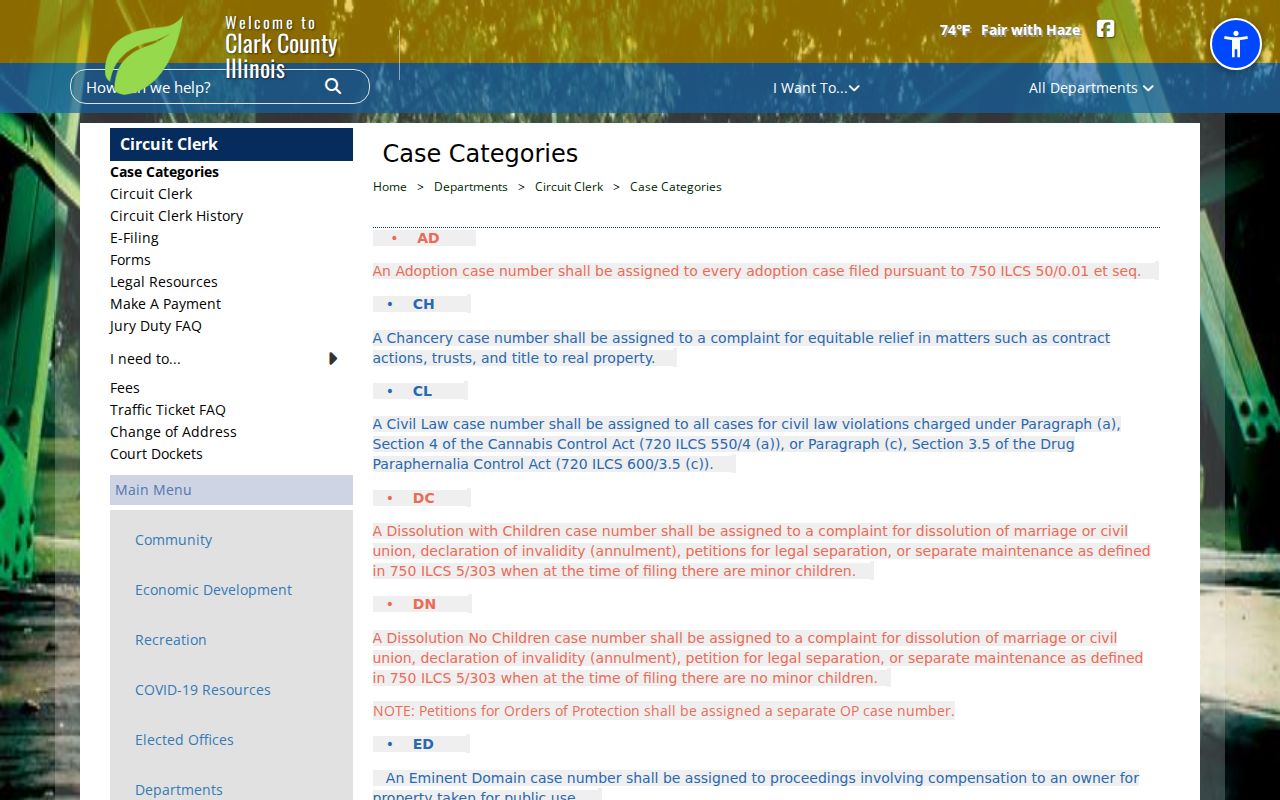
Reading the code beside the disposition prevents a docket label from being mistaken for a conviction.
Criminal Case Stages in Clark County
After an arresting agency completes its report, the State's Attorney decides what charge to file. The clerk opens the proper category. Arraignment places the accusation before the defendant and addresses the plea. Pretrial work may include motions, discovery, status hearings, and release conditions. A plea or trial leads toward disposition, and a conviction may proceed to sentencing.
Case flow: Charges Filed › Arraignment › Pretrial › Plea or Trial › Disposition › Sentencing
Each stage leaves a different docket trace. A filing shows an allegation. A continuance shifts a hearing. A dismissal ends a filed count without a conviction. Court supervision has its own legal effect and should not be casually called a conviction. Obtain the signed judgment or certified disposition when the distinction matters.
Clark County Court Copy Fees
The clerk's fee schedule separates copying, certification, searching, and mailing. The first page costs $2, pages two through nineteen cost $0.50 each, and later pages cost $0.25 each. Certification is $6. A search without the case number costs $6 for each year. Mailing is $10 plus postage.
The county fee page pictured below is the source to revisit before payment.
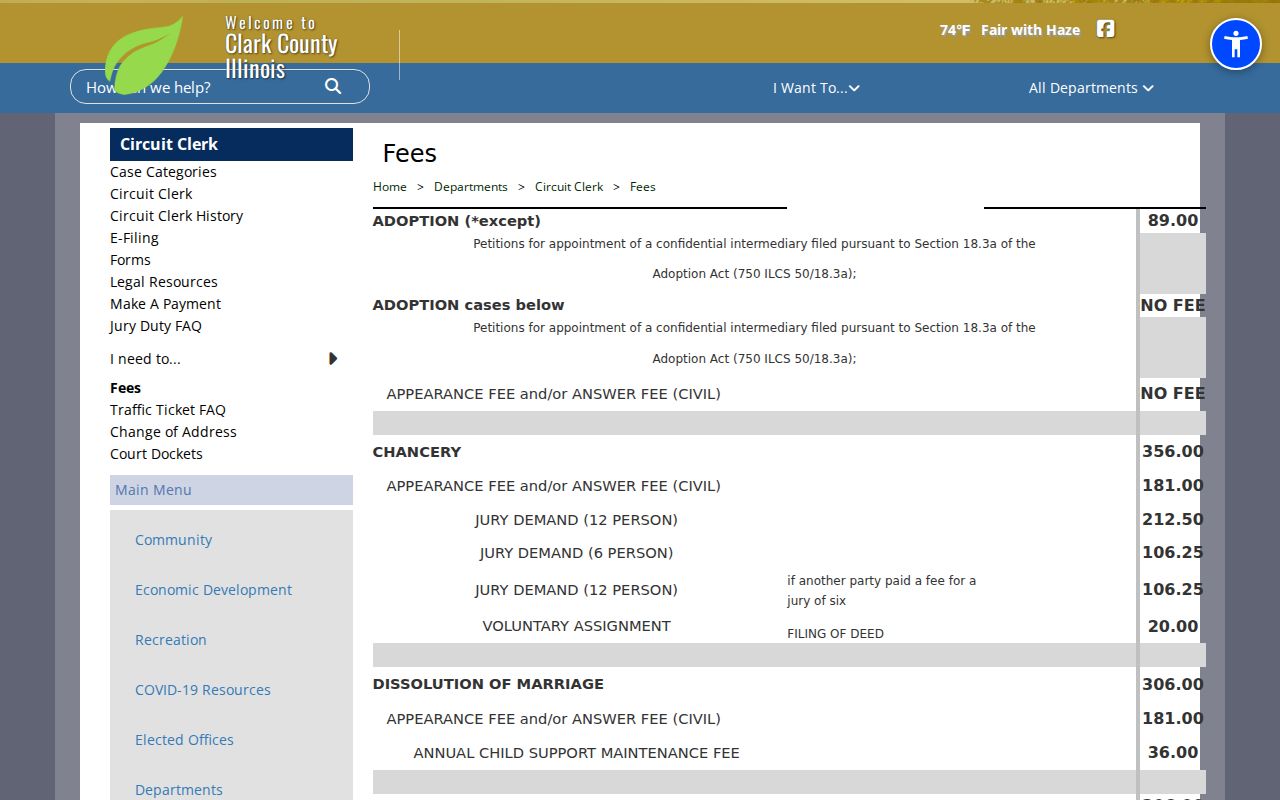
Giving a full number and naming the exact disposition keeps the request focused.
Clark County Circuit Clerk
501 Archer Avenue
P.O. Box 187
Marshall, IL 62441-0187
217-826-2811
Fax: 217-826-1391
Monday through Friday, 8:00 a.m. to 4:00 p.m.
Clark County and re:SearchIL
re:SearchIL is the Illinois Supreme Court's document repository, but it does not promise that every Clark County criminal document is remotely open. Access depends on policy, account status, case type, and restrictions. Local Judici and the Circuit Clerk remain the direct Clark County routes.
The image shows the statewide layer that can supplement a Clark County request.
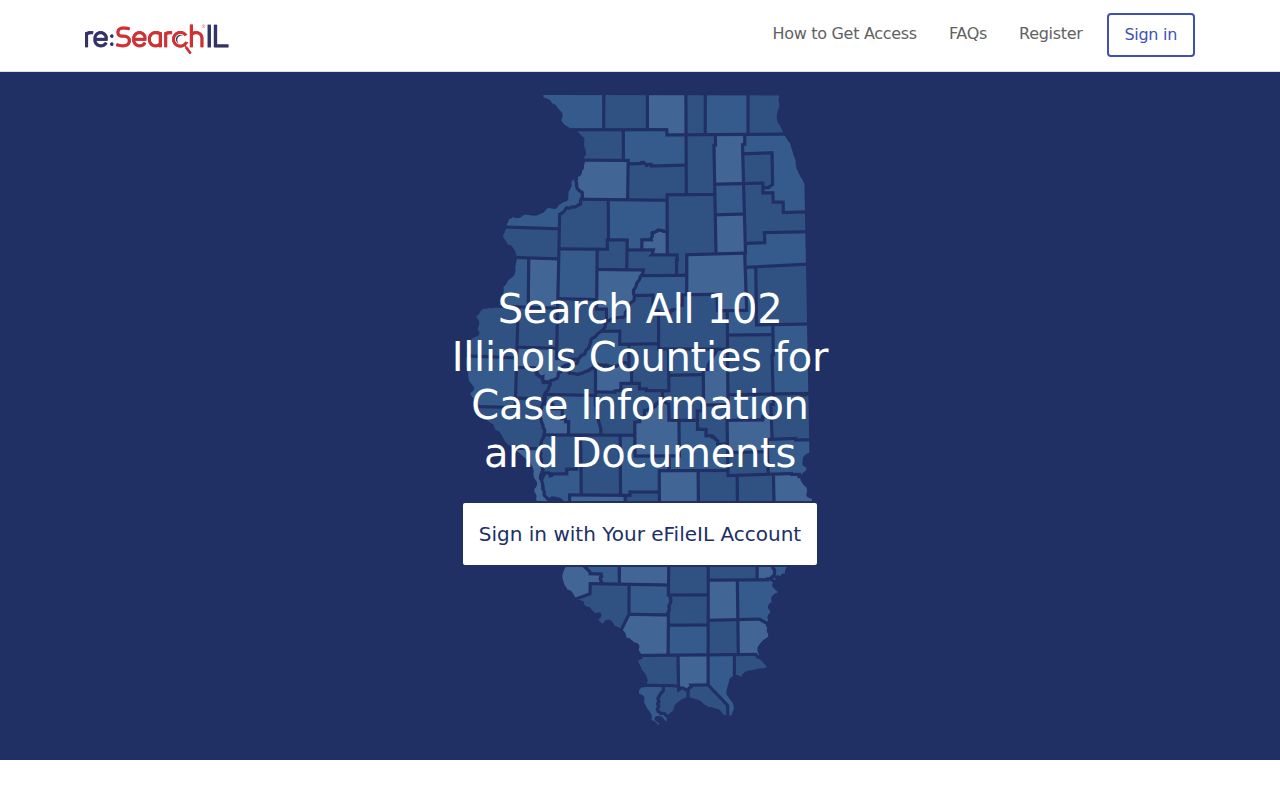
Since May 1, 2025, public reviewing-court documents have remote access without the former document fee, a change that is not blanket trial-court access.
Access Rules for Case Records
Illinois court records are presumptively open unless law or court order restricts them. Remote access can be narrower than courthouse inspection. Juvenile cases, sealed or expunged matters, presentence reports, protected victim and minor data, private financial identifiers, and sensitive health information may be withheld or redacted.
If a Clark County file does not appear, ask the clerk whether the issue is spelling, age, indexing, access level, or a lawful restriction. Staff can explain procedure but cannot choose a legal remedy. A certified disposition is more reliable than an inference from an incomplete docket.
Clark County received a 2024 grant to rework its public-terminal area and a 2025 accessibility grant for courthouse equipment and lift needs. Those steps improve physical access without changing which records are public.
An absent online image does not mean the filed paper is confidential, and a missing name result does not prove that no case exists. Ask about older files, spelling variants, access levels, and copy options. Read the charge-level disposition with the judgment and sentence rather than treating a short docket label as the whole case.
Case category also matters. A CF number points to a felony case, CM to a misdemeanor case, DT to DUI, and OV to an ordinance matter. Search more than one category when a single event may have produced separate filings, then compare dates and case numbers before ordering copies.